KRISHNA MANDIR
LALITPUR DISTRICT
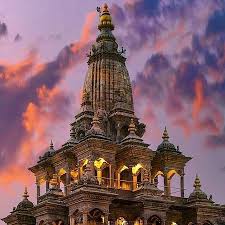
Krishna Mandir
In 1637, the Krishna temple on Patan's Darbar square's west side was finished. Legend has it that a dream served as its inspiration. In a dream, the gods Krishna and Radha appeared in front of the palace, according to King Siddhi Narasingh Malla (1620–61). The King gave the order to have a temple constructed there. After urging Krishna to defeat his adversaries, the King prevailed in a conflict with a neighboring nation ten years later. The King erected a miniature version of the temple within the Sundari Chauk courtyard as a token of appreciation.
It is is built in the sikhara style common to north India and Bengal, a design technique found in monuments as far afield as Bagan, Myanmar. Beneath its 21 golden pinnacles are three floors. The first floor enshrines Krishna, the second Shiva, and the third Lokeshwor. Except for the ground floor, a series of chhatri pavilions frame the inner ambulatories; eight each are located at the corners and cardinal directions of the second and third levels, while the fourth level includes four ornamental chattri built directly into each face of the sikhara. On the ground floor, the inner walls of the wraparound gallery are divided into five bays on each side, with a door located at the center of each facade. The remaining bays feature scenes from the Ramayana and Mahabharata narrated in Newari script.
The temple is dedicated to Lord Krishna, a major deity in Hinduism known for his role in the Mahabharata and as the embodiment of divine love and wisdom. Devotees from across Nepal and beyond visit Krishna Mandir to offer prayers, especially during festivals like Krishna Janmashtami, which celebrates the birth of Lord Krishna.
Culturally, Krishna Mandir stands as a symbol of Patan’s rich Newari heritage and artistry. Its exquisite stone carvings depict scenes from the Ramayana and Mahabharata, blending religious storytelling with local craftsmanship. The temple is also a vibrant center for community gatherings, rituals, and festivals, preserving traditional customs and fostering social unity.